
By Grizzly Insulation CO
Ask three people what the attic insulation code requires in Denver, and you’ll likely get two different answers: R-49 and R-60. Both numbers show up in actual code documents. Here’s what actually decides for Grizzly Insulation CO which one applies to your Denver house.
What R-Value Actually Means for Your Denver Attic
R-value is a number that shows how well a material resists heat moving through it. The higher the number, the better it insulates. In an attic, that number is directly tied to depth. Roughly speaking, more inches of insulation means a higher R-value, though the exact ratio depends on the material.
Denver’s Attic Insulation Code Requires R-60
As of May 1, 2023, Denver adopted the 2021 edition of the International Energy Conservation Code with local amendments. Under that code, the prescriptive ceiling and attic insulation requirement is R-60. That’s the number in Denver’s own adopted energy code table, and it’s higher than the citywide requirement was before this update. Before you assume every Denver attic needs a flat R-60, though, there’s a detail in the same code that explains where the R-49 number comes from.
The R-49 Substitution Rule Explained for Denver
Denver’s code includes a specific exception: where the code calls for R-60 in the ceiling or attic, installing R-49 across the entire ceiling or attic area satisfies that requirement, as long as the full, uncompressed height of that R-49 insulation extends completely over the top plate at the eaves. In plain terms, if the insulation is installed at full depth all the way to the edge of the roofline, with no thinning or compression where the roof meets the wall, R-49 is allowed to stand in for R-60.
It’s written into the code on purpose, because getting a full, uncompressed R-60 layer to actually reach the tight edges of an attic near the eaves is difficult without specific framing, like a raised-heel truss, which is a roof truss built with extra height right where it meets the exterior wall, giving insulation room to stay at full depth instead of tapering to almost nothing at that edge. Without that extra framing, R-49 done correctly at the edge condition can perform close enough to R-60 to be treated as compliant.
What Compression Actually Looks Like at the Eaves
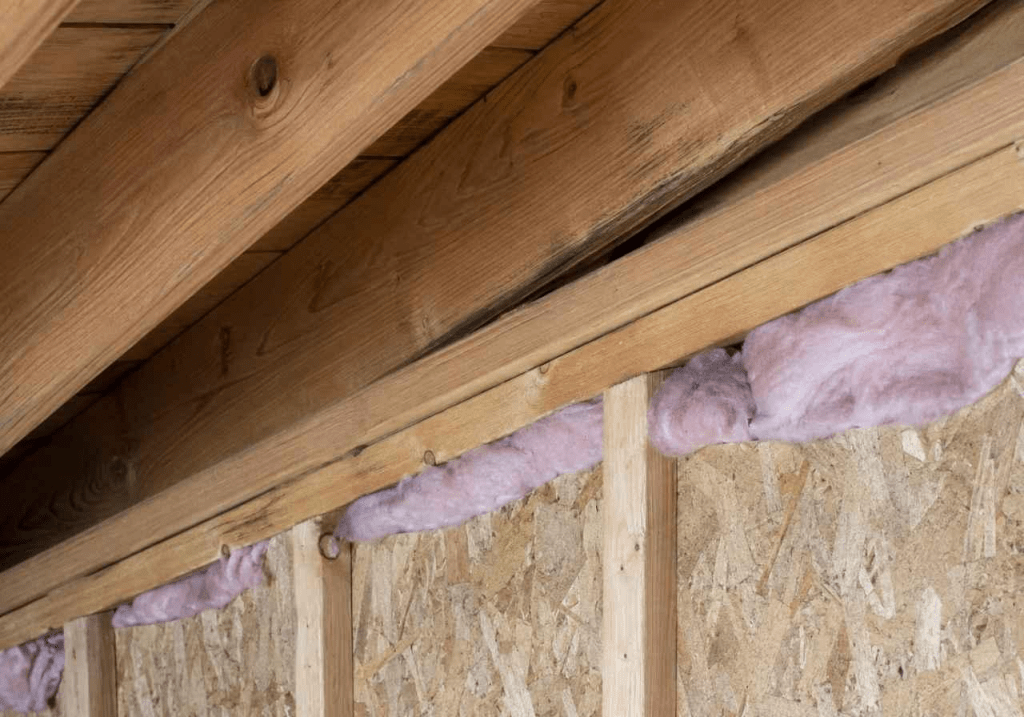
This matters because most attics naturally get thinner near the eaves. The roofline slopes down toward the exterior wall, the space narrows, and insulation that started at a full 16 or 18 inches near the center of the attic can taper down to almost nothing right where it meets the wall. That tapered edge is exactly where heat escapes fastest, since it’s the thinnest point in the entire ceiling plane. The code’s substitution rule exists specifically because this edge condition is where compliance most often quietly fails, even in attics that look well insulated from the hatch.
Why Denver’s Attic Insulation Code Changed in 2023
Before Denver adopted the 2021 energy code, the prior code cycle set the ceiling requirement at R-49 outright. So if you’re comparing information written before May 2023 to information written after, you’re comparing two genuinely different code cycles, not a disagreement about the same rule. The requirement really did increase, and a lot of what’s out there simply hasn’t caught up. The jump itself isn’t small either, going from R-49 to a true R-60 typically adds somewhere in the range of fifty to seventy-five cents per square foot of attic area, which is a meaningful cost difference worth understanding before you compare quotes.
Which Insulation Level Actually Applies to Your Denver Attic
Here’s how to think about it for your own house. If a contractor installs R-60 straight across your attic, uncompressed, that meets the code outright, no exception needed. If a contractor proposes R-49 instead, ask specifically whether it will be installed at full depth all the way to the eaves, because that’s the exact condition the substitution requires. R-49 with any compression or thinning near the edges doesn’t meet the standard on its own; it only qualifies under that specific full-depth condition.
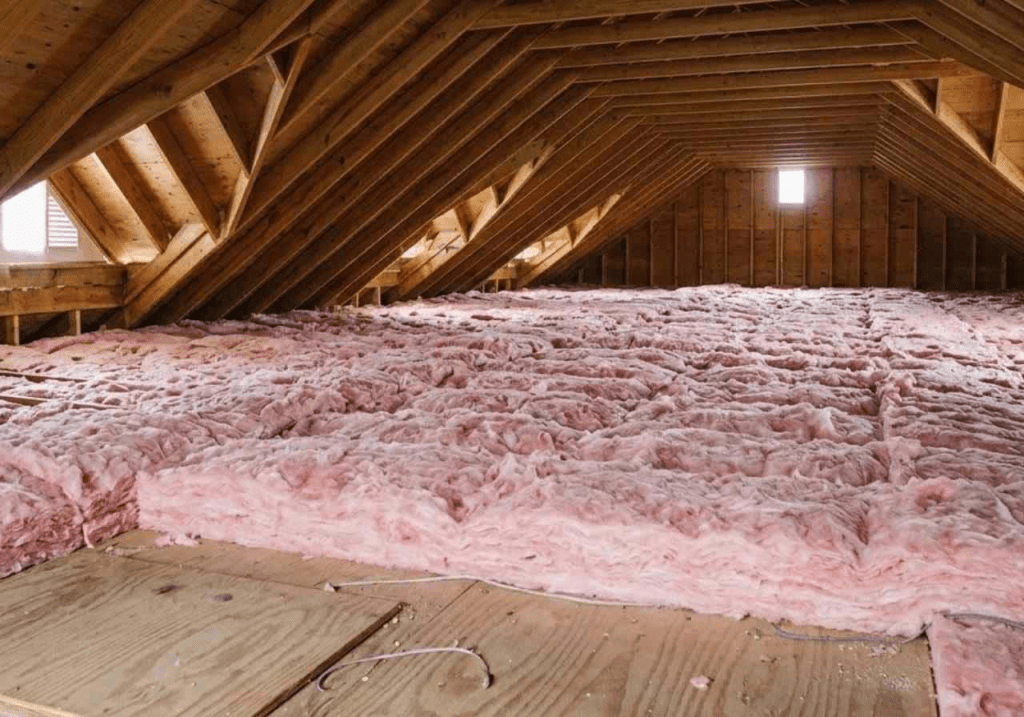
This is also why insulation quotes can vary in a way that looks confusing at first. A contractor quoting R-49 isn’t automatically cutting corners, and a contractor quoting R-60 isn’t automatically overselling you. The question to ask is which condition their installation actually meets, not just which number is on the quote.
Our team at Grizzly Insulation CO tells homeowners which of these two paths we’re installing before the work starts, not after. If we’re proposing R-49, we explain exactly why that meets code for your specific attic, including how we’re handling the eaves to keep the insulation at full depth all the way to the edge, and whether your roof framing needs any adjustment to make that possible. If your attic needs the straight R-60 path instead, we say that too and show you where in the attic the depth is actually measured, as part of every attic insulation service we quote in Denver.
Conclusion
R-60 is Denver’s baseline requirement as of 2023. R-49 is a legitimate substitute, but only when it’s installed at full, uncompressed depth all the way to the eaves. Once you know which condition your Denver attic actually meets, the confusion mostly disappears. It was never really a disagreement, just two different, specific standards getting flattened into one number by people who didn’t need to explain the difference.
Related Posts
Home Gym Flooring Options That Protect Subfloor and Reduce Noise
A home gym can expose every weak spot in a…

Cabinet Painting Phoenix AZ: Refresh Your Kitchen Today
A kitchen can feel completely different after a thoughtful cabinet…

Essential Manor Ultimate Updates for Better Spaces
A manor house can make you feel two things at…